











How to Become a Seafarer: Routes for Deck and Engine Careers
Becoming a seafarer usually means choosing between two broad routes: joining as a rating (a skilled crew member who works under officers) or training as an officer on the deck or engine side. Both need approved safety training, a medical certificate and time at sea. Officers also study for professional certificates that are checked by the maritime authority of the country that issues them.
Rules differ by country and by the flag a ship sails under, so use this page as a map and confirm the details with your national maritime administration or an approved training institute.
The two departments
Most merchant ships are organised into departments.
- Deck department: navigation, cargo operations, mooring, watchkeeping and ship safety. Officers rise from third officer to second officer, chief officer and master (captain).
- Engine department: the main engine, generators, pumps and the ship’s mechanical and electrical systems. Officers rise from fourth or third engineer through second engineer to chief engineer.
- Catering and other roles: cooks, stewards and, on some vessels, electro-technical officers or radio and security staff.
The two main officer routes differ in what you study, but both lead to senior jobs with strong responsibility.
Route 1: Officer cadet
The most common entry to an officer career is a cadetship, which combines classroom study with periods of sea service.
- Entry requirements. Maritime colleges and training providers usually ask for a minimum standard of school education, with maths and physics often valued, along with good English, since English is the common working language at sea. Age limits and exact subjects differ between countries.
- Approved training. Programmes may be a degree, a diploma or a shorter structured scheme that leads to a certificate of competency. Some are sponsored by shipping companies.
- Sea time. Cadets work on board for a required period, recording their tasks in a training record book that is later checked.
- Examinations. Candidates sit written, oral and practical assessments set by the national authority.
- First certificate. A newly qualified deck officer receives a certificate as officer in charge of a navigational watch, and an engineer as officer in charge of an engineering watch.
The partnership model described in the cadets programme page shows how companies and training bodies can fit these stages together.
Route 2: Starting as a rating
Many seafarers begin as ratings and later study to become officers, an approach sometimes called “hawsepipe” or progression from the ranks.
- Deck ratings include ordinary seaman and able seaman.
- Engine ratings include wipers, motormen and fitters.
Ratings need basic safety training, a medical and a period of sea service for each step up. Some countries have schemes that let experienced ratings train for officer certificates, though these usually involve further study and examinations.
The STCW requirement
Nearly all seafarers must hold training certificates under the International Convention on Standards of Training, Certification and Watchkeeping for Seafarers (STCW), which the International Maritime Organization oversees. Basic safety training normally covers personal survival, fire prevention and fighting, elementary first aid, and personal safety and social responsibilities. Further courses depend on ship type and role. Read more on the IMO’s STCW page, and see the companion article on STCW for a fuller explanation.
Costs and warning signs
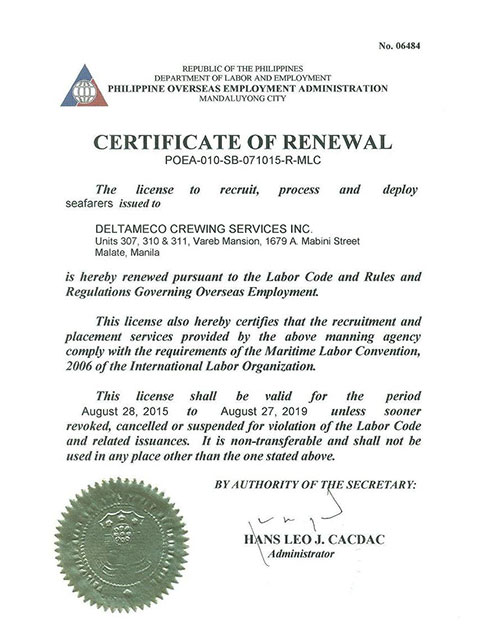
Training can be expensive, and funding differs widely: some cadets are sponsored by shipping companies, some by governments, and others pay their own way. Compare what is included, such as accommodation, equipment and sea placements, and ask whether the placement is guaranteed in writing. Be cautious about any recruiter who demands payment before a contract exists. In many countries charging seafarers for jobs is prohibited under the Maritime Labour Convention, so check the rules with your national authority.
Medical fitness
Seafarers need a valid medical certificate, since life aboard is physically demanding and help can be far away. The standard checks vision, hearing, general health and the ability to do the job safely. Requirements and issuing doctors vary by country, so use your national authority’s approved list.
Documents and contracts
Besides certificates, seafarers usually need a passport, a seafarer’s identity document or discharge book where used, and visas for some ports. The Maritime Labour Convention 2006 sets minimum standards for employment agreements, hours of work and rest, repatriation and living conditions. For the paperwork side of crewing, see the explanation of crew administration.
Life on board
Contracts commonly last several months at a stretch, followed by leave. Life at sea involves shift work, small teams, limited shore time and long distances from family. Some people like the structure, the travel and the pay prospects. Anyone considering the career should consider both sides honestly.
Career progression
- Officers gain sea time, sit exams for higher certificates and move up through ranks.
- Experienced seafarers may move ashore into roles such as fleet management, marine superintendence, training, port operations, surveying or crew management. The overview of crew training and development discusses how career support works.
Frequently asked questions
How long does it take to become an officer?
It varies by country and course, but programmes typically combine a few years of study and sea time before the first certificate.
Do I need a degree?
Not always. Some routes lead to a diploma-level certificate, while others include a degree. Requirements depend on the national authority and the college.
Can women become seafarers?
Yes. Women work in all departments, though they remain a small proportion of the global workforce, according to industry and IMO publications. Policies and onboard facilities differ between employers.
Can I start without any maritime experience?
Yes, as a cadet or entry-level rating, provided you meet the medical and training requirements. Be wary of anyone who asks for large fees upfront for guaranteed jobs, and always verify agencies with your national authority.
Planning your route
The route you choose depends on your schooling, budget and goals. Compare approved programmes, check what certificates you will gain and confirm requirements with your maritime administration. Start from the home page for an introduction to how crewing works.